
SCOTUS To Decide Scope of January 6 Criminal Prosecutions
Apr 15, 2024
Tomorrow, the U.S. Supreme Court will hear oral arguments in Fischer v. United States, where a January 6 defendant is appealing the government’s use of an evidence destruction law to criminally charge him for entering the U.S. Capitol to exercise his First Amendment rights to assemble, speak, and petition.
In December 2023, the High Court granted the petition of Joseph Wayne Fischer, who has been charged with “corruptly” obstructing an official proceeding, namely the joint session of Congress that was convened on January 6, 2021, to certify the 2020 election. The defendant states he briefly entered the U.S Capitol Building after Congress had recessed.
Currently, the Justice Department has charged nearly 330 individuals, including President Donald Trump, under this law for obstruction of Congress.
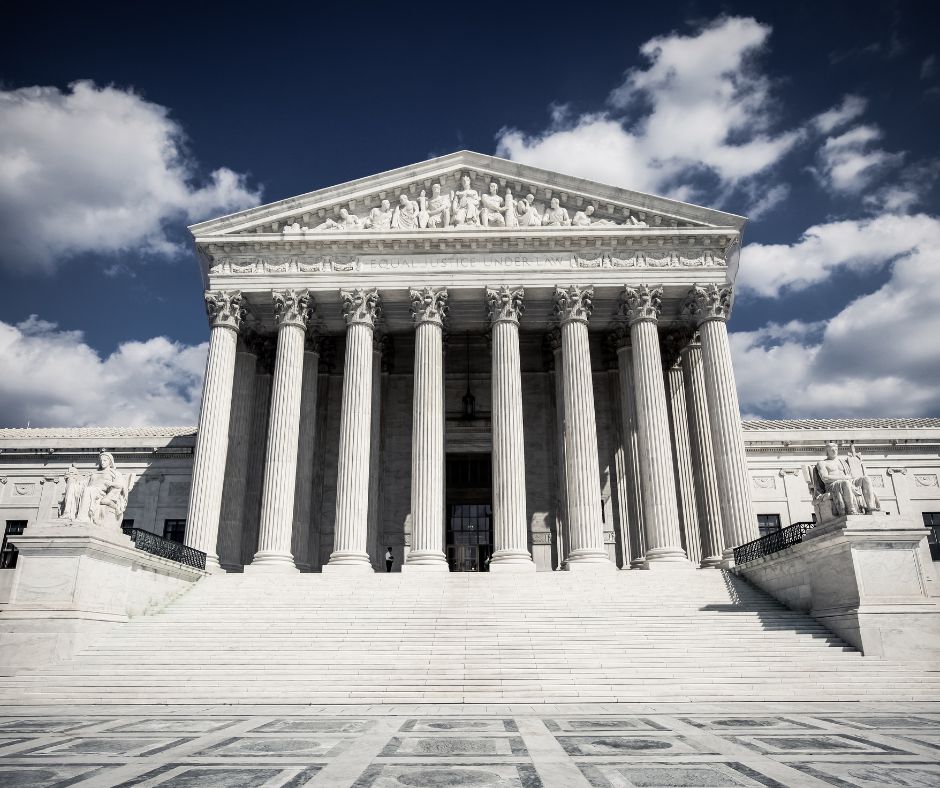
Liberty Counsel filed an amicus brief to the High Court which argues Section 1512(c) of the 2002 Sarbanes-Oxley Act, a “document-shredding prohibition” that grew out of the collapse of the Enron Corporation, is being used in an unprecedented manner to “criminalize large swaths of constitutionally protected expression” and runs “roughshod over the First Amendment.”
In this case, Fischer contends the federal government is exceeding the scope of Section 1512(c), which was designed to prevent the fraudulent destruction of corporate financial records. Specifically, the law makes it a felony to corruptly alter, destroy, mutilate, or conceal a record, document, or other object with the intent to undermine an official proceeding. A second part of the statute also applies to anyone who “otherwise obstructs, influences, or impedes any official proceeding.” The law authorizes up to a 20-year prison sentence for violators.
The defendant argues this law should not apply in his situation as he did not engage in a similar manner to those at Enron.
In March 2022, a U.S. District judge dismissed the Section 1512(c) charge against Fischer reasoning the law was only intended to narrowly apply to evidence tampering that leads to an obstruction of an official proceeding. However, in April 2023, the U.S. Court of Appeals for the District of Columbia Circuit ruled 2-1 to reverse that decision and reinstate the charge against Fischer. The Appeals Court stated that “under the most natural reading” of the second part of the statute, the law “applies to all forms of corrupt obstruction of an official proceeding.”
Countering that argument in a dissenting opinion, Judge Gregory Katsas stated the Justice Department’s “all-encompassing” interpretation of the law would make it both “improbably broad and unconstitutional in many of its applications.”
Liberty Counsel concluded in its brief that the Circuit Court’s “untethered interpretation” of this law and the Justice Department’s “selective prosecution” of January 6 defendants under it “runs afoul” of the U.S. Constitution.
“It criminalizes [the] fundamental First Amendment freedoms to speech, assembly, and petition,” stated Liberty Counsel. “[I]t leaves men guessing whether their constitutionally protected expression will subject them to felony prosecution and 20 years’ imprisonment. The Circuit Court’s interpretation of Section 1512(c) simply cannot stand. This Court should reverse and hold that Section 1512(c) does not apply beyond its intended document-shredding purpose.”
Liberty Counsel Founder and Chairman Mat Staver said, “The Sarbanes-Oxley Act has nothing to do with the events of January 6. It arose out of the Enron scandal to prevent document shredding for the purpose of concealing corporate fraud. The First Amendment does not permit the government to make political expression, assembly, or petitioning the government into criminal acts.”
Liberty Counsel advances religious liberty, the sanctity of human life, and the family through litigation and education. We depend on your support, which enables us to represent people at no cost. Click here to GIVE NOW.

TAKE ACTION


Post Office Box 540774
Orlando, FL 32854
(407) 875-1776
Contact: LEGAL HELP
Contact: Other Issue/Question
Name
Choose Password
SIGN UP TO STAY INFORMED!
Liberty Counsel is a 501(c)(3), tax-exempt nonprofit organization. Contributions are tax-deductible to the extent permitted by law.
View our Privacy Policy.
©Copyright 1995 - present. All Rights Reserved.


