
Religious Speech Discrimination Case Before the U.S. Supreme Court
Jul 9, 2025
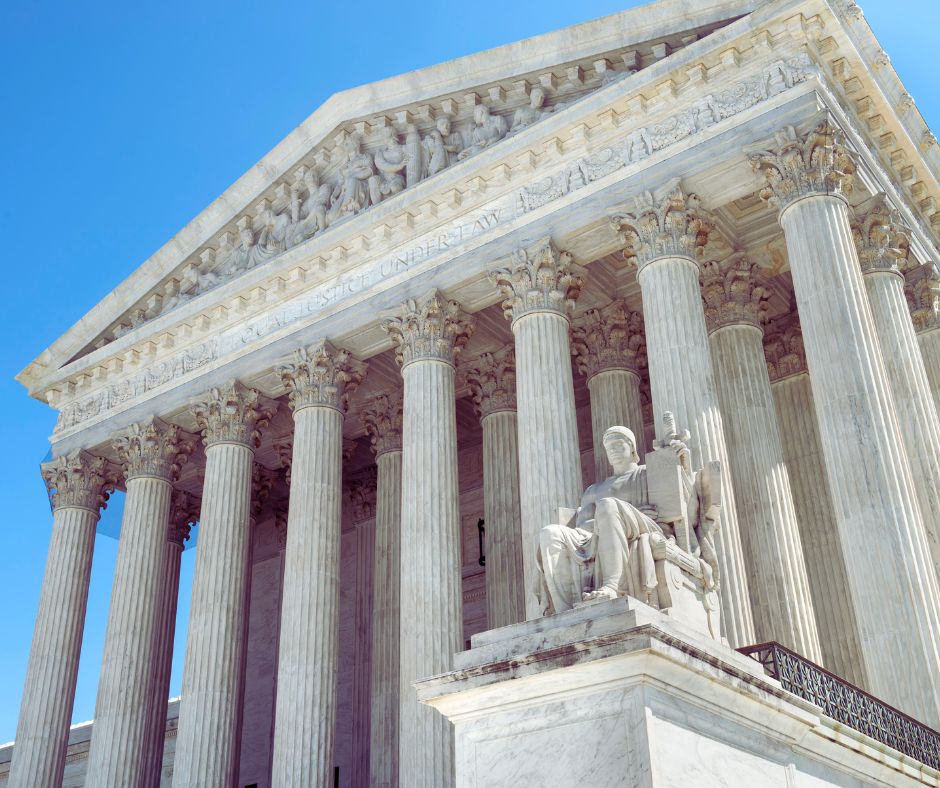
Liberty Counsel filed an amicus brief asking the U.S. Supreme Court to review Cambridge Christian School v. Florida High School Athletic Association regarding the unconstitutional viewpoint discrimination and hostility to religious expression against the school’s request to pray over the public loudspeaker on the basis that it is religious speech, while permitting commercial and other non-religious speech. The Christian school is represented by First Liberty.
Cambridge Christian School is a private pre-K-12 Christian school in Tampa, Florida that sued the Florida High School Athletic Association (FHSAA) for denying their request to allow them and another Christian school, University Christian, to conduct a joint prayer over the loudspeaker before the championship football game as a violation of the Free Speech and Free Exercise Clauses of the United States and Florida Constitution. The FHSAA cited the Supreme Court's Establishment Clause precedent and the principle of “separation of church and state.” The district court dismissed the complaint for failure to state a claim.
During the litigation, FHSAA argued that all speech over the public microphone was not religious speech but was government speech. The Eleventh Circuit Court of Appeals reversed the dismissal of the Free Exercise and Free Speech claims. The parties presented evidence that the loudspeaker was frequently used for private speech. However, the district court still granted summary judgment for FHSAA. The Eleventh Circuit affirmed, holding that all loudspeaker speech is government speech.
In 2015, both schools asked to use the loudspeaker at the stadium to lead attendees in a pregame prayer. The FHSAA had allowed University Christian to use the loudspeaker prior to a 2012 championship game against a different Christian school. But in 2015, the request was denied and the association explained that the facility was a public facility, that the FHSAA was a “state actor” and, therefore that it could not permit or grant a request for pre-game prayer. The game was played before a crowd of 1,800.
Before the game, the two teams met at the 50-yard line to pray together as a sign of fellowship. However, the loudspeaker was not allowed to be used for prayer. Fans were unable to hear due to the size of the stadium and Cambridge Christian stated that “the FHSAA denied the students, parents, and fans in attendance the right to participate in the players' prayer or to otherwise come together in prayer as one Christian community.” Yet, before, during, and after the game, the PA system was used by the FHSAA public-address announcer to “deliver various messages, including advertisements, commentary, and other communications.” At halftime, each team was given seven minutes for its cheerleading squad to perform. During this time Cambridge Christian says it was permitted by the FHSAA to “take control of the loudspeaker,” which the cheerleading coach used to play music from her smartphone. No apparent limitations were placed on the content of the messages the schools could and did deliver at halftime.
This case is similar to Liberty Counsel’s Shurtleff v. City of Boston case where the High Court ruled unanimously that the city could not discriminate against flying the Christian flag on the Boston City Hall Plaza public forum flagpole. As a result, Shurtleff, combined with the Coach Kennedy case, resulted in the overturning of a 51-year-old case known as Lemon v. Kurtzman. The longstanding “Lemon Test” had been used to censor Christian viewpoints. Then in Kennedy v. Bremerton School District, the High Court upheld Coach Joe Kennedy’s private, religious speech to silently pray on the football field after games and finally buried the “Lemon Test.”
Liberty Counsel stated in its brief, “The Eleventh Circuit engaged in a rigid analysis limited to three factors – history, endorsement, and control – and upheld the erroneous decision of the Florida High School Athletic Association to prohibit either of the two Christian schools participating in the high school football state championship from solemnizing the game with prayer. The court’s rationale for upholding the FHSAA’s blatantly unconstitutional viewpoint discrimination was that the proposed prayer would have been government speech and, therefore, was insulated from review.”
“It is imperative that this Court grant certiorari, reverse the judgment of the Eleventh Circuit, and clarify and extend its holding in Shurtleff to make clear that “government speech occurs if—but only if— a government purposefully expresses a message of its own through persons authorized to speak on its behalf, and in doing so, does not rely on a means that abridges private speech,” wrote Liberty Counsel.
Liberty Counsel Founder and Chairman Mat Staver said, “The Florida High School Athletic Association cannot discriminate against prayer over the loudspeaker before a game between two Christian schools but allow other public secular messages. We urge the High Court to take this case that is unconstitutional viewpoint discrimination and hostility to religious expression.”
Liberty Counsel advances religious liberty, the sanctity of human life, and the family through litigation and education. We depend on your support, which enables us to represent people at no cost. Click here to GIVE NOW.

TAKE ACTION


Post Office Box 540774
Orlando, FL 32854
(407) 875-1776
Contact: LEGAL HELP
Contact: Other Issue/Question
Name
Choose Password
SIGN UP TO STAY INFORMED!
Liberty Counsel is a 501(c)(3), tax-exempt nonprofit organization. Contributions are tax-deductible to the extent permitted by law.
View our Privacy Policy.
©Copyright 1995 - present. All Rights Reserved.


