
U.S. Supreme Court Will Hear Women’s Sports Cases
Jul 9, 2025
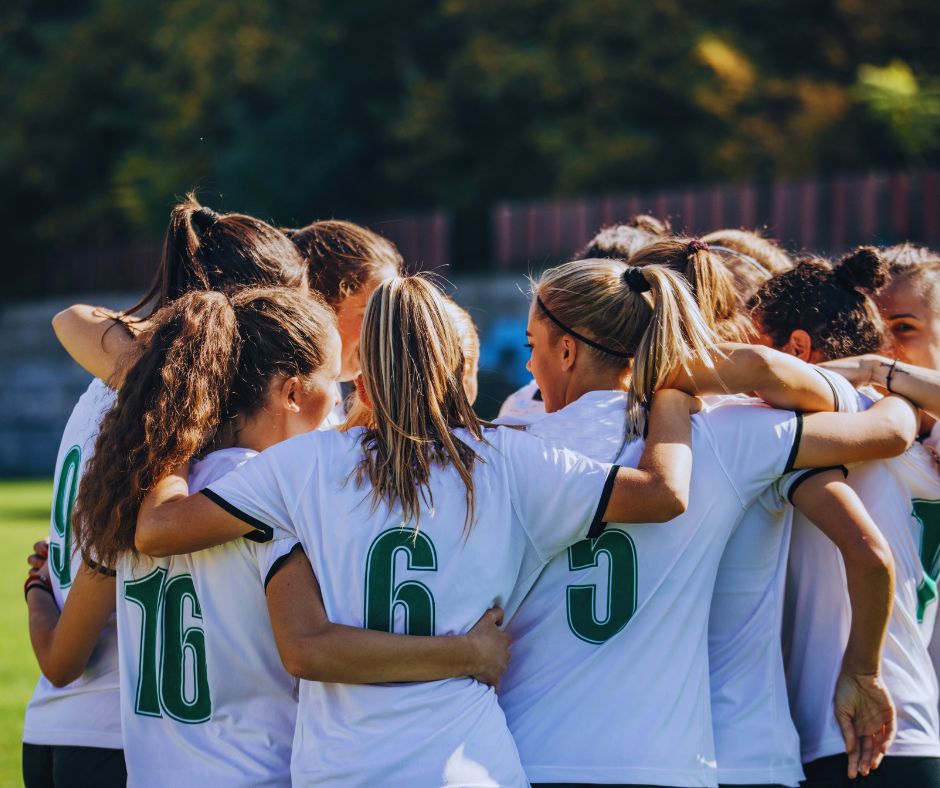
The U.S. Supreme Court has agreed to hear two cases concerning state laws in West Virgina and Idaho that ensure equal opportunity and protection for women’s sports. The State of West Virginia v. B.P.J and Little v. Hecox have been brought before the High Court by former NCAA women athletes who have witnessed the result from allowing males to intrude in women’s sports. Liberty Counsel will file an amicus brief in these cases that will be decided in the High Court’s 2025-26 term.
In State of West Virginia v. B.P.J., former Stetson University college soccer player Lainey Armistead asked the U.S. Supreme Court to hear the case after the Fourth Circuit Court of Appeals ruled against West Virginia’s law protecting fairness in women’s sports. Known as the “Save Women’s Sports Act,” the law stipulates that athletic teams or sports designated for females shall not be open to individuals whose biological sex determined at birth is male. The lawsuit alleges the state’s law is unconstitutional.
The law was challenged by the mother of Becky Pepper-Jackson, a 13-year-old male who was prohibited from running on the girls’ middle school’s cross-country team. Jackson has been taking puberty blockers and has publicly identified as a girl since the third grade. The United States District Court for the Southern District of West Virginia initially granted Jackson a preliminary injunction. However, upon review of cross-motions for summary judgment, the court reversed its decision and ruled that the law was constitutional and did not violate Title IX.
The Fourth Circuit Court of Appeals disagreed with the lower court’s decision and ruled that the law violated Title IX and the Equal Protection Clause and could not lawfully be applied to prevent Jackson from participating in the girls’ school sports teams. The court dismissed the cross-appeal, vacated in part, reversed in part, and remanded the case with instructions to enter summary judgment for Jackson.
In Little v. Hecox, former Idaho State University cross-country and track runner Madison Kenyon joined the lawsuit after being forced to compete against a male during her freshman year in 2019. Kenyon and Idaho Attorney General Raúl Labrador are asking the High Court to uphold the state’s Fairness in Women’s Sports Act after the Ninth Circuit Court of Appeals blocked the law from going into effect.
In March 2020, Idaho enacted the law that bans males from participating in women’s student athletics. The law provides a sex dispute verification process, which allows any person to dispute the sex of a student athlete participating in female athletics and requires intrusive medical procedures to verify sex. Lindsay Hecox, a male who wanted to join the Boise State University women’s track and cross-country teams, and Jane Doe, a woman who played on high school varsity teams and feared that her sex would be disputed under the law due to her masculine features, filed the lawsuit against the Fairness in Women’s Sports Act.
The United States District Court for the District of Idaho granted a preliminary injunction against the law, holding that it likely violated the Equal Protection Clause of the Fourteenth Amendment. The Ninth Circuit Court of Appeals affirmed the district court’s decision and found that the law discriminates against gender-confused athletes and is not substantially related to its stated goals of equal participation and opportunities for women athletes. The Ninth Circuit remanded the case to the district court.
Liberty Counsel Founder and Chairman Mat Staver, “President Donald Trump signed an executive order this year to stop males from competing in female sports and subsequently declared that ‘the war on women’s sports is over.’ With the split in the appeals court, the U.S. Supreme Court now has the opportunity to enforce and extend this protection for girls and women. Many female athletes have been competitively, physically, and emotionally harmed by policies allowing males into their sports and private spaces and this must come to an end.”
Liberty Counsel advances religious liberty, the sanctity of human life, and the family through litigation and education. We depend on your support, which enables us to represent people at no cost. Click here to GIVE NOW.

TAKE ACTION


Post Office Box 540774
Orlando, FL 32854
(407) 875-1776
Contact: LEGAL HELP
Contact: Other Issue/Question
Name
Choose Password
SIGN UP TO STAY INFORMED!
Liberty Counsel is a 501(c)(3), tax-exempt nonprofit organization. Contributions are tax-deductible to the extent permitted by law.
View our Privacy Policy.
©Copyright 1995 - present. All Rights Reserved.


