
SCOTUS To Review KY Zoning Dispute Blocking Church Construction of Grotto
Nov 19, 2026
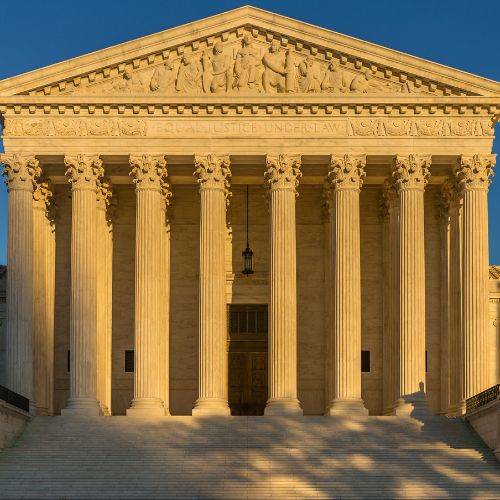
Liberty Counsel filed an amicus brief to the U.S. Supreme Court in Missionaries of St. John the Baptist v. Frederic, a case where a Kentucky Catholic group says local zoning restrictions prevent it from building a small structure behind a church to be used for quiet reflection and prayer in the size and form required by its religious convictions.
The Justices agreed in October to review the case in which the Kentucky Supreme Court had sided against the Catholic group ruling that denying them a zoning permit did not substantially infringe on their rights nor violated the Religious Land Use and Institutionalized Persons Act (RLUIPA) because it applied rules neutrally regardless of whether projects were religious or nonreligious. The local zoning board had approved the permit but that approval was challenged by residents living across the street from the prospective site of the 39-foot grotto. The residents are concerned about additional traffic the site would create. The state trial court sided with the Missionaries of St. John the Baptist, but the state appeals court reversed that decision, and the state supreme court upheld that reversal. The Missionaries of St. John the Baptist now seek SCOTUS to weigh in on the apparent confusion in the courts of how RLUIPA should be applied.
RLUIPA is a federal law that gives churches and religious organizations strong protections against government land-use regulations so they do not substantially interfere with religious practice unless the government can prove the restrictions are truly necessary and are narrowly tailored.
In the amicus brief, Liberty Counsel argues Congress enacted RLUIPA for the singular purpose of providing “very broad protection for religious liberty.” Yet, many courts (including the Kentucky Supreme Court) have looked beyond the law’s plain text and have applied “no fewer than sixteen different factors” to determine whether governments are burdening religious land use. Liberty Counsel suggests that courts should focus on how a zoning regulation affects the specific religious group in the lawsuit, not on broader factors beyond that “person, assembly, or institution.” The brief states that the Kentucky Supreme Court wrongly downplayed the religious burden by saying the Catholic group could build a smaller grotto or pursue alternatives than building on property already owned by a church despite the group’s religious convictions which require otherwise.
Liberty Counsel noted that even when governments prefer uniform enforcement, RLUIPA requires a more focused inquiry to determine if the government burdened individual religious exercise.
“If the regulation at issue ‘puts petitioner to the choice’ between compliance with the regulation or compliance with its religious beliefs, ‘it substantially burdens his religious exercise,’” reads the brief. “Using the proper [individual] standard, the Court should reverse the decision of the Supreme Court of Kentucky and find there to be a substantial burden upon the Missionaries of St. John’s religious exercise.”
The U.S. Supreme Court will hear the case January 20, 2027, with a decision expected in June 2027.
Liberty Counsel Founder and Chairman Mat Staver said, “The Religious Land Use and Institutionalized Persons Act is a key federal provision for religious liberty enacted to prevent governments and municipalities from burdening sincere religious practice. The U.S. Supreme Court has the chance to clarify how courts should apply the law when zoning restrictions force religious groups to choose between their faith or government restrictions. The Kentucky Supreme Court ruling should be overturned because the law as applied to the Missionaries of St. John the Baptist imposed an unnecessary, restrictive burden without a compelling interest to do so.”
Liberty Counsel advances religious liberty, the sanctity of human life, and the family through litigation and education. We depend on your support, which enables us to represent people at no cost. Click here to GIVE NOW.

TAKE ACTION


Post Office Box 540774
Orlando, FL 32854
(407) 875-1776
Contact: LEGAL HELP
Contact: Other Issue/Question
Name
Choose Password
SIGN UP TO STAY INFORMED!
Liberty Counsel is a 501(c)(3), tax-exempt nonprofit organization. Contributions are tax-deductible to the extent permitted by law.
View our Privacy Policy.
©Copyright 1995 - present. All Rights Reserved.


